Monday, September 30, 2013

ARNSW Home Brew 40m antenna day

A beautiful day to be out doors in Sydney's Dural on Sunday. The theme was 40m antennas and there was lots of great talk, show and practical setting up of different antennas. A slinky antenna looks like a good idea but this one was too tangled to put up.


Stephen, VK2BLQ, had a big collection which began with the Ozi-pole short dipole for 40,20,10 and 6m.


Then a broadband end fed long wire the Ozi-Wire:


Peter Parker's end fed trap for 40 & 20m:


Outside antennas were put up using a variety of means, including a bow and arrow:


A telescopic flag pole (very patriotic):


There was a shortened vertical by Peter VK2EMU, here inspected by Mal, VK2BMS:


An impressive 40m quarter wave vertical seemed to perform well:


The stand-out for me was Owen's marvellous end fed half wave tuners, this one with a variometer, here being tuned by John VK2ASU:


An interesting comment was made about following detailed antenna instructions from Europe and the U.S. in that antennas perform differently here in Australia because our earth is much less conductive.

Ironically, antennas in Australia perform better when put up at night, when it's raining. There's a thought..

Sunday, September 29, 2013

Tune in to popular Downloadthisshow Sunday at 9pm

Downloadthisshow, a weekly panel and interview show by Marc Fennel, now has more than 300,000 subscribers on SoundCloud. Add that to subscribers on the iTunes podcast and of course radio listeners on ABC Radio National, some local stations and Radio Australia, and it's an amazing audience built by one talented and hard working producer, presenter and editor, Marc Fennell:


Maybe people are just following the oh, so subtle, command embedded in the program title?

This week, with co-panelist Karalee Evans, we chat about ads on Instagram, buying emerging art from Artsicle, and we play with the hand tracking Leap Motion.


While space wars might seem like a fun application for the Leap motion:


In the show you'll hear that I have a much more down to earth idea for the technology. RN, Sunday at 9pm.

Hornsby Ku-ring-gai fire control centre

Saturday was open day at the state of the art Hornsby Ku-ring-gai Fire Control Centre used by the Rural Fire Service to support local volunteer fire crews. It's an impressive communications and incident management setup.


The tour I had was hosted by Peter, VK2GPH and Leah, VK2FREE (great call sign!).

Originally the plan was to have a barbecue but ironically it was a "TFB" day and I had to bring cheese sandwiches instead.

Monday, September 23, 2013

Low cost vertical laptop stand from wood desk easel

Retina MacBook Pro screens are so sharp it's crazy not to use them as the primary screen when working at a desk.

Presumably Apple will introduce a range of retina desktop screens sometime soon (October anyone?), but until then I had a great idea for how to prop up my office laptop in a near vertical position while still being quite stable.

The trick is to use a little wooden desktop easel available for under $30 from art shops. At left is the one I bought and below is how my desk now look at the office. It's adjustable and has a nice pine wood smell and all. I've seen other stands at stationery stores and they are expensive and cheap plastic construction.

Here's how my desk looks now. (I do have an external screen on the right for running the iOS simulator and viewing documentation).


Saturday, September 21, 2013

iOS 7 adoption soon to exceed iOS 6

After only a few days, my apps are starting to show the amazing uptake of iOS 7. Here's my proportions in WSPR Watch from yesterday.

39.2% iOS 7.0 compared to 40.5% iOS 6.1.3 plus 7.6% for iOS 6.1.4.

iOS 7 seems a bit rough at this point so I can only assume they rushed it out to be able to launch with the new iPhones last week. I'm sure there will be some updates in the weeks ahead. Having said that - it's fine for daily use and a refreshing change.

Update a day later. iOS 7 is still growing fast.

Note that Google Analytics swapped the colours around. iOS 7 is now at 50.8% which exceeds the total for iOS 6 for my app.

Friday, September 20, 2013

Queuing for an iPhone 5s in Sydney - human nature on display

Even though I generally have no trouble picking up a new Apple product soon after launch, I decided to get up early and queue outside the Sydney George Street store this morning. It was an interesting experience.

Oddly, the crowd was overwhelmingly of Asian origin.


I arrived at 6:15am and there were hundreds already lined up around the block and down York Street. The woman in front of me was from Thailand, and behind me were a group of ten from Vietnam.

Without exception, everyone I spoke to wanted a gold iPhone 5s (clearly Apple has missed a key desire in the Asian market until this year). Many were in the queue to buy stock to resell at a profit in countries where the launch will not be for some time.

The group of ten from Vietnam were a "team" that planned to buy the maximum and then go back and re-join the queue. That means two 5s and ten 5c phones that would leave on a flight later in the day.

Given the long time involved (I joined at 6:15 and got to the store at about 10:00) a major annoyance was people surreptitiously jumping the queue. I saw a couple join in a driveway gap, they played dumb and said they thought that was the end of the queue, hmm. Without too much prodding they backed off and left.

Another pair kind of stood beside the queue for a while in front of the woman in front of me and then started walking with the queue until they gradually merged in. The woman was annoyed but didn't say anything - I was not so easy going.

I told them they could not just join a queue hundreds of people in - the main chap looked me in the eye and said he'd been there all morning "since 4:30am". I said that was nonsense. Next he claimed to be with a guy in front - I tapped him on the shoulder and asked to confirm the connection, there was none.

What I found amazing is that this guy was calm and while behaving in a rather vague way was able to look me in the eye and lie repeatedly. I called the security guards and they agreed that these interlopers had pushed in. The guards assured them that even if they stayed in the queue they would not get a phone. Even so, the queue jumpers remained in place for some time. They asserted that the guards would soon forget and all would be well.

I asked how they could lie so blazingly, they explained that everyone is like that. In the end they did give up and we reached the door of the shop.


Overall the mood was good, with lots of chat and good organisation from the Apple store staff on hand. I do feel manipulated though, Apple took a lot of time to process orders - offering a full service including SIM swaps, carrier plan activation and data migration. Many customers, like me, just wanted to purchase outright and could be in and out in a minute, but we had to wait.

The queue attracted the normal media attention with TV stations, plus a helicopter and I was briefly interviewed by @ClaireRPorter of News Ltd (until she figured out that we've met as fellow commentators).

The iPhone 5s is great by the way, the Touch ID fingerprint unlock is a truly differentiating feature that will lead me to use the phone much more than in the past. The other great unexpected feature, at least in Australia is the amazing tiny charger:


Oh and the 64bit processor and M7 motion chip which will hopefully replace the need to carry a FitBit dongle.

Gold 16GB and later 32GB phones sold out first, the same story was reported at Broadway which I visited at lunch time. They said they had "plenty" of the lower priced 5c phones.

I can see why Apple is not too concerned about going "cheap", even when they do the high end phone seems to sell more - at least near launch. Time will tell but I think the colour phones will be the big seller in the months ahead.

Next time, I'll skip the queue, but it was an entertaining experience.

Monday, September 09, 2013

Chinese HF transceiver X1M initial impressions

Just arrived in the shack is a very compact 4.5W all band SSB HF transceiver of Chinese origin. With a price of US$350 + shipping and an all surface mount (except the final) construction it was hard to resist. Here it is next to my trusty Yaesu FT-817:


While construction is a little "home brew" by comparison to the Yaesu, the X1M has a very informative display that is easier to read than the '817. The buttons are pretty flimsy but ok and the volume and tuning knob are basic but will do the job. Here's the top view:


This is a very solid feeling, compact rig that runs on 9.6 - 14.5 Volts DC and will be terrific for portable QRP operation drawing 500mA on receive. The receiver is quoted as being better than 0.45uV and the pre-amp seems to make a huge difference.

Received audio is strong (the Elecraft KX3 could learn from this rig!) but bandwidth is fixed.

Receive: 0.1 - 30MHz continuous.

Transmit:

Band 1 3.5 – 4.0 MHz (80 Meters)
Band 2 7.0 – 7.3 MHz (40 Meters)
Band 3 14.0 – 14.35 MHz (20 Meters)
Band 4 21.0 – 21.45 MHz (15 Meters)
Band 5 28.0 – 29.7 MHz (10 Meters)

There is a DB9 serial connector on the back and the rig can be controlled as if it was an FT-817 (ah the irony). I'd love to see something like this with a USB cable for both control and audio - that would make a terrific digital modes transceiver.

F1 and F5 increase or decrease the tuning rate while F2-F4 operate soft buttons which show on screen.

I'll report back next weekend when I've had some contacts, but my feeling so far is that this is a pretty good little short wave radio that covers 0.1 - 30MHz continuous and as a bonus transmits too.

The user manual pdf is here.

Here's a contact with Mal, VK2BMS.

Thanks Mal.

Saturday, September 07, 2013

Raspberry Pi interfacing with piface

The Raspberry Pi has turned in to a very flexible platform for dedicated computing tasks. I run one as an OpenVPN server, in the office we have one displaying server stats on a big TV. This week I purchased a PiFace board that provides a bunch of I/O controlled via an SPI interface.


I found the documentation covering getting started is a bit confusing so here's my summary based mostly on the Element14 document.

sudo apt-get update
sudo nano /etc/modprobe.d/raspi-blacklist.conf 
# comment out blacklist api-bcm2708
sudo modprobe spi-bcm2708
wget http://pi.cs.man.ac.uk/download/install.txt
bash install.txt

sudo reboot

And here's a simple python script to cycle one of the relays on and off along with the indicator LED.

#!/usr/bin/python
# flash an led with piface

import piface.pfio as pfio
from time import sleep
pfio.init()

while(True):
    pfio.digital_write(0,1) # turn on
    sleep(1)
    pfio.digital_write(0,0) # turn off
    sleep(1)

So that's "hello, world", the rest is easy. (Control-C to get out of the loop by the way).

The board has 8 output bits. Bit 0 and 1 have relays connected to them, all have little on-board LEDs. They can be turned on or off like this:

import piface.pfio as pfio
pfio.init()
pfio.LED(2).turn_on()
pfio.LED(2).turn_off()

There are 8 input bits, the first 4 have push buttons on the board. Here's how to read the first (0th) bit:

>>> import piface.pfio as pfio
>>> pfio.init()
>>> print pfio.Switch(0).value
0
>>> print pfio.Switch(0).value

1

For that last Switch() probe I'm holding down the push button nearest to the edge of the board.

Saturday, August 24, 2013

Airplay video to a Raspberry pi - yes and no

Messing around with a Raspberry Pi recently used as a Wifi hotspot, led me to an idea for a box installed on the projector in a meeting room that creates a wifi network that you can join to send your screen to the projector without the need for annoying cables and adapters. It turns out that recent versions of XBMC support AirPlay. I first tried Raspbmc but had more luck with OpenELEC.


It works pretty well, and is able to use the tiny Edimax Wifi USB dongles to join my home network and do all the amazing XMBC stuff pretty well - I've spent the afternoon watching fantastic Apollo videos and TED talks.

If you turn on Airplay it works on my iPhone when I'm using apps like YouTube but not apps like ABC iView - why?

It turns out that Airplay is not just one thing, it's a combination of technologies and while YouTube works because the controlling client passes the HLS m3u8 url over to the XBMC server which then streams it from the server, clients with either secure video or doing video sharing are not able to stream to XBMC over the network.

I think the solution to my problem is to combine a Wifi hotspot, probably an Airport Express, with an Apple TV box, but where's the hacker fun in that? (I wish Apple would make an Apple TV box with some sort of "AirDrop" for video for use in meeting rooms).

Sunday, August 18, 2013

Reverse engineering network traffic with a Raspberry Pi

Sometimes it's useful to monitor traffic between a client and the server for debugging or to figure out how something works. In the past I've used a Linksys WRT54gl router which can be flashed to run OpenWRT. These devices don't have much free space so recently I've started using a Raspberry Pi for the same purpose. It's much more compact and more capable.


To create a Wifi hotspot with a Raspberry Pi, I followed the instructions at Adafruit. The system needs a dhcp server to give out addresses to wifi clients, hostapd to authenticate clients and some iptables commands to nat the addresses of TCP requests going through the device.

The Wifi USB dongle I purchased is an Edimax Nano USB WiFi adapter (EW-7811Un) which cost $35 over the counter. These seem to work well with the Pi's limited power budget and are capable of being a hotspot.

My network is called "honeypot".


The simplest way to snoop on what an app is doing is with tcpdump. I monitor traffic on the wireless interface and display the first part of each packet in ascii. The command is "sudo tcpdump -i wlan0 -A". Here's what I see on opening a TV guide app:


You can see they are talking to flurry and crashlytics, but the display is not very convenient for seeing what's going on.

A more friendly way to watch HTTP traffic is to use a proxy such as mitmproxy. Then set the proxy on the device to point to it. Now in our terminal we see a nice summery of each request.


Pressing return lets us drill in to the request and see the headers nicely formatted:


Pressing tab switches over to the response:


Lots of interesting things to learn in there! I typically then use the MacOS JSON Edit program for exploring json data (there's lots of tools around for this).

iOS apps seem to honour the proxy setting but I find that often Android apps do not, or only do some. It's possible to use iptables to set up a transparent proxy. I've got this mostly working although most https requests mostly seem to fail, here's my magic incantation:

#!/bin/bash
# start a transparent proxy
sudo sysctl -w net.ipv4.ip_forward=1
# clean old firewall
sudo iptables -F
sudo iptables -X
sudo iptables -t nat -F
sudo iptables -t nat -X
sudo iptables -t mangle -F
sudo iptables -t mangle -X

# nat on the local lan
sudo iptables -t nat -A POSTROUTING -o eth0 -j MASQUERADE
sudo iptables -A FORWARD -i eth0 -o wlan0 -m state --state RELATED,ESTABLISHED -j ACCEPT

# forward all requests to the proxy
sudo iptables -t nat -A PREROUTING -i wlan0 -p tcp --dport 80 -j REDIRECT --to-port 8080
sudo iptables -t nat -A PREROUTING -i wlan0 -p tcp --dport 433 -j REDIRECT --to-port 8080

mitmproxy -T --host

So, a $38 raspberry pi plus a $35 Edimax wifi dongle, makes a pretty nice Wifi hotspot with advanced network inspection capabilities.

Saturday, August 03, 2013

Knobless Wonder 7.16MHz SSB transceiver is on the air

I'm excited to report that my build of Peter, VK3YE's, simple fixed frequency "Knobless Wonder" transceiver is complete and I've just had my first contact with Stephen, VK2BLQ.


Aside from a few errors along the line of me pulling out incorrect component values a few times, the circuit was very simple to build. The major problem I had was that the RF transmit side was unstable due to some long runs of unshielded wire but that was fixed with some thin coax.


My thanks to Peter Parker for this excellent design and to Mal, VK2BMS and Stephen VK2BLQ for giving me signal reports.

Sunday, July 28, 2013

Amateur Radio Home Brew group - "making frequency"

The theme of today's ARNSW Home Brew group meeting was "making frequency" and we had a diverse range of approaches on show. It's fascinating how technology has moved from crystal oscillators, to phase locked loops to computer controlled DDS in a few short years.

John, VK2ASU, demonstrated how to raise the frequency of a quartz crystal by carefully grinding it to make it thinner.

This is done first with 600 grade sand paper and later directly on a glass sheet using a fine compound such as toothpaste.

The evolution of a flexible Atmel processor controlled DDS based oscillator was shown, starting with the prototype and ending with a very nicely boxed up unit with plenty of space to house perhaps an entire transceiver at a later date.


Here's the prototype:


Here's how the completed project turned out:


Stephen, VK2BLQ showed a "Huff and Puff" stabilised oscillator he had constructed.


It's amazing to me how even non-computer nerds are getting in to embedded processors for ham radio applications these days. Mostly the Arduino and Raspberry Pis are popular but here's a nice board Bob made:


Peter, VK2EMU, explained phase locked loops and DDS and the crowd had a great time.


In other news, my build of Peter, VK3YE's "Knobless Wonder" is now transmitting well - I had a good report on my audio and signal from Mal, VK2BMS.


I've been having some trouble with transmit RF oscillation - due mostly to my use of long, unshielded wires, but I'm gradually improving things. Both transmitter and receiver work but I have yet to add a relay to allow easy switching.

My transmit audio is reported to be clear but "thin", Mal does say it's very readable and "communications quality". Great progress!

Saturday, July 20, 2013

So long slide night

Do you remember the tradition of meeting up with friends or family, a few weeks after they'd returned from an overseas trip, to view a (hopefully edited) selection of their photos.

Those days have ended.

During our trip away, friends and family have seen photos hour by hour via photo sharing on Instagram and Facebook. It's made the trip have a different feel to "getting away" in past years. Everywhere we stayed has WiFi to the internet and between the four of us we brought a lot of computer gear: 4 smartphones, three tablets and two laptops in all.

To charge all this I brought a power board from home and a single international plug adapter so the normal chargers could be used. (This is a great idea from John O'Brien).

One place we stayed had WiFi internet provided by a little Huawei e586 device which unfortunately can handle only five connections.

I'm not sure if it was the fault of the e586 or the way iOS devices give up their WiFi connections but we had real problems finding a slot and I ended up paying for BT Wifi for a few days. I do not recommend a five connection device for a household.

Presumably triggered by the record high Australian dollar a few months ago, I've been following several friends who are also out of the country at the moment - cheers to fellow travellers Ben, Tony and Marc - it's been fun following your adventures too this month.

Travelling with Airbnb accommodation

We're coming to the end of a four week European vacation. Most of our accommodation was booked through Airbnb and I thought I'd share our experience.

Airbnb, and similar sites, let people with some space to rent do business securely with travellers who need a room. Typically these are self-contained units and while sometimes the owner lives nearby, or even upstairs, we didn't generally interact with the proprietor after an initial greeting and key hand-over.

The great thing is that compared to a hotel room you get a kitchen, clothes washing facilities and an internet connection. I particularly like not having to go to a restaurant for every meal. The host is available by phone if you get stuck which is reassuring.

As you are renting from inexperienced landlords, they do tend to have some quirks. Some of the spaces were oddly cluttered with nicknacks that they might have thought enhanced the spaces, but really meant that we had no place to put our luggage.

Sometimes the host has a lot to say when we first arrived, tired from a long flight, and it might have been better if they left us to it and dropped back for the "orientation" session.

Like eBay, Airbnb lets both parties review each other and from what we heard some guests leave a big mess so we've tried to do the right thing in each place. Reviews of land lords tend to be positive and subtly hint at issues rather than being clear about them. (My guess is that when you write a review of a place knowing that after reading it, the other party will review you, it tends to calm things down a bit).

The biggest issue we had was hot water not working due to insufficient flow from the shower to trigger  the on-demand heater. Looking back at past reviews it's clear this isn't a new issue.

A good thing about travelling is remembering how great it is to live in Australia. Spacious houses, modern bathrooms, comfortable beds and a lack of street crime. Big European cities seem like the "third world" in some ways compared to how we live in Sydney.

Sunday, July 14, 2013

New Software Defined Radio Transceiver, with knobs, from Italy

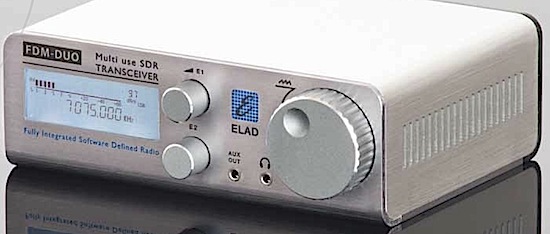
While on tour in Europe I do miss my radio shack. Searching around I stumbled upon this interesting SDR in a box with knobs coming soon from Italy.


There's more information on the FDM-DUO available but basically it's a flexible software defined radio  transceiver, with 5W out, that can be used either with a computer as the back end or with just the knobs and buttons on the unit itself.

We're clearly at a cross-road at the moment, where many of the standard amateur radio transceivers are of very dated design (it's amazing to me that the FT-817 is still a current product) and the plummeting price of embedded computers means that advanced software defined radios should be very cheap to manufacture.

Thursday, July 11, 2013

Small cars in Italy

I love how in Bologna in particular there are many many cyclists of all ages. The other thing that I like is that there are some very small cars. I did see lots of Smart cars for two, some of those three wheel motorcycles and a few other small cars like these which I think are used by the postal service:


Plus some small electric cars.


Paris has electric charging on the streets too:


Wednesday, July 10, 2013

Slow food from Modena, Bologna

I'm not really a "foodie" but we spent a pleasant day looking at three foods made in mostly traditional ways here in Bologna. There's an official process which gets the D.O.P. stamp in each case.

First we looked at the way Parmesan cheese is made. Big vats with a steam jacket and various mixers both manual and automatic are used.


Once curdled, the cheese is removed in "cheese" cloth.


"Wheels" of cheese are soaked in salt solution.


 Finally it ages for years in a storage areas where inspectors come and tap it with a curious little hammer.


Next up, Balsamic vinegar, which is made by taking fermented grape juice, ageing in different wood barrels and progressively moving to smaller barrels.


 The most expensive version we tasted was liked by most of us less than the cheaper stuff, but my taste may not be highly trained enough for this sort of thing.

Finally Mortadella, which is made from the hind quarter of happy pigs. It's dried in salt and aged for years until the inspectors feel it's just right.


Our guide urged us to only buy products marked as made in Modena and certified D.O.P., he explained how expensive and time consuming the process was and in the end I asked how much money they loose on each product sold.

At the end of all this, we enjoyed the scenery in the hills above Bologna and ate an enormous lunch that ironically did not feature any of the foods we'd seen.


A pleasant day out in lovely country.