Friday, September 23, 2011

Lazy days at Port Stephens with dolphins

This week we took a couple of days out, during off season, north of Sydney at Port Stephens. The water must be very clean here as dolphins swim right up to the jetty:


We went on a "wave watching" boat trip and the dolphins like riding the "pressure wave" at the bow of the boat apparently for the fun of it:


While wandering around, I had a play with the new Instagram for iPhone.


It emulates bad analog film to good effect.


I spend a lot to get a lens that doesn't vignette and yet it is kind of nice.


This narrow focus effect doesn't work so well for me. It seems artificially abrupt.


During our time away, I did have to work but was able to do it via a 3G modem without any trouble.

The place we stayed was virtually empty. I took the UV-3R and listened in to the marine VHF channel 16 on 156.800 which was kind of fun.

Monday, September 19, 2011

UV-3R Torch with bonus VHF/UHF/FM SDR Radio

A new toy just arrived...


While not quite a "gift", for AU$40 (+$15 postage), it's pretty cheap for a tiny transceiver with a state of the art software defined radio inside. The feature that gets most prominence on the box is the "high illumination flashlight" feature.


I bought via eBay out of Hong Kong and it turned up 9 days after I ordered, which seems excellent. Despite the box getting a bit of a bash, all was well inside.


This one came with a USB programming cable, Windows software, separate antennas for VHF and UHF, a soft case, charger and charging dock. It seems to work fine.

These units set an amazing low price point and while the quality of the plastic is not as good as a "name brand" rig, given the advanced technology inside, the UV-3R is leading to a lot of discussion and even modifications.

Check out:
From the data sheet: "The RDA1846 is a highly integrated single-chip transceiver for Walkie Talkie applications. It totally realizes the translation from RF carrier to voice in the RX path and from voice to RF carrier in the TX path, requiring only one micro controller.

The RDA1846 has a powerful digital signal processor, which makes it have optimum voice quality, flexible function options, and robust performance under varying reception conditions.".


I wish we would see this technology in low cost HF equipment.

Thursday, September 15, 2011

Solar powered ham shack gets a new controller

The new ham shack is up and running. The 65W solar panel is placed simply on the north facing side of the roof. There is some shade during the day but it seems to be producing enough for my operating time.


The little charge controller supplied by Jaycar was really meant for a night light so I purchased something more elaborate from Hong Kong via Ebay made by ProVista Technology. It's a very nice unit.


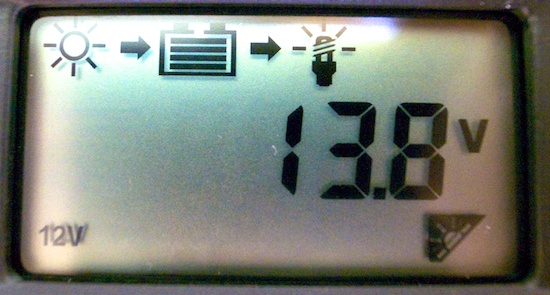
It's an ISC3020 which is rated at 30A input and load current. It has a very informative multi-page LCD display. Here it is both charging and supplying power and the battery is at 13.8V.


Both current drain and charge current are available. Here's charge current of 4.8A.


I paid AU$75 + $20 postage from Ebay seller greensolarwind and it came in 10 days.

Monday, September 12, 2011

Ham shed build

Ever since we filled in the swimming pool a few years back, I've noticed that there's enough space in the back yard for a shed. Here's a likely spot:


This morning the truck arrived with all the bits.


Although offered as a kit, I'm glad I paid to get the guys to do the construction for me. The sheer weight of some parts, such as the solid floor would have been difficult for me, let alone getting the walls up and square. This shed is 2.3m x 2.9m.


It's on piers but has a very solid floor over that. I'm confident it will not be flooded even in the biggest rains we've seen. After the floor was done, the walls went up quickly.


The walls are pretty solid wood and I'm hoping they'll provide enough insulation for winter and summer nights. If not I'll add insulation and lining later.


Definitely a two person job.


Almost to lock up stage after a couple of hours:


We had some extra carpet stashed away which makes it rather luxurious. It's going to take a while to get all my radio and electronics bits arranged satisfactorily.


The solar panel was simply laid on the roof and I'm keen to see how practical it is to power the whole operation this way. For now I'll run an extension cable out with mains for soldering iron and CRO but later I'll probably get mains power on.

Re-routing antenna coax is going to take a bit of time but I expect to be back on air within a day or so.

I can recommend the supplier Outdoor Living & Lifestyle and their installers are just wonderful blokes. They even had an industrial strength radio, that runs on the same rechargeable batteries as their tools, to keep them entertained:


I looked at metal sheds, they are much cheaper (particularly if you don't count the concrete floor you need to put down), but in the end spent $3,600 total for what you see above, including delivery and installation.

Friday, September 02, 2011

Towards a solar powered ham station

Great news, I'm getting a shed. Every man needs a shed and the plan is to move my ham radio gear into it.

It's still a few weeks off but I'm going to try to power it mostly from a solar system which ideally should be able to keep a small WSPR station going indefinitely.

Solar panels seem to vary a great deal in price, specialist solar shops seem very expensive, Jaycar is in the middle, and eBay vendors are suspiciously cheap.

There are rumours around that the cheapest solar panels in from China lie about the power output and that's why they are so cheap.

I purchased a 65W panel with a small charge controller from Jaycar for $400 and also bought a 26Ah battery. I don't recommend this particular charge controller, Powertech MP3128, as it's designed to run a night light (the sales person didn't mention this). The load voltage only comes on when the solar panel is in darkness, so I'm connecting direct to the battery which risks fully discharging it. Better controllers monitor this and protect the battery.

To see if I can keep a station going, I've rigged up the solar panel, just next to the house, only vaguely north, the charge controller and a transceiver that draws 1.3A on receive, and rigged up a very simple voltage logger using an Arduino and a netbook. (I won't use this transceiver for WSPR but thought it was a good test load for experimentation).


The Analog input on the Arduino measures up to 5V so I'm using a roughly 4:1 resistor voltage divider to feed it. The software in the Arduino sends a measurement every 5 seconds over the USB serial link. On the netbook, I use pyserial to read lines with the measurement, prepend the date time stamp and append to a file.


Here's the Arduino code:

const int analogInPin = A0;  // Analog input pin
int sensorValue = 0;        // value read 

void setup() {
  // initialize serial communications at 9600 bps:
  Serial.begin(9600); 
}

void loop() {
  // read the analog in value:
  sensorValue = analogRead(analogInPin);            

  // print the results to the serial monitor:

  Serial.print(sensorValue);
  Serial.print("\n");      

  // wait before the next loop
  // for the analog-to-digital converter to settle
  // after the last reading:
  delay(5000);                     
}

Here's the simple python code on the netbook:

import serial
import time

DEVICE = '/dev/tty.usbserial-A4001KYJ'

ser = serial.Serial(DEVICE, 9600, timeout=60) # 60 seconds

line = ser.readline().strip()
while len(line):
    print "%s\t%s" % (time.asctime(), line)
    line = ser.readline().strip()

Today is mostly cloudy with very occasional full sun so I'm losing charge at this point. I'll gather data for a while and prepare a longer term graph but here's the first hour or so.


An Arduino and a netbook running Linux is a very useful combination.

Only a little sun this morning and now mostly cloud through the day.  I used matplotlib to draw the voltage chart to a PNG image like this:


import matplotlib
matplotlib.use('Agg')


import matplotlib.pyplot as plt
import csv


INFILENAME = 'log.txt'
VOLTSCALE = 42.4186


datareader = csv.reader(open(INFILENAME,'r'), delimiter='\t')
points = []
for row in datareader:
    if len(row) > 1:
        volts = float(row[1]) / VOLTSCALE
        points.append(volts)


plt.plot(points)
plt.ylabel('Volts')
plt.show()
plt.savefig('voltgraph')


Here's how it looks:


With overcast skies the solar panel couldn't keep up with the 1.3A load and in the end I turned it off. I'm quite impressed with the Arduino for data logging and matplotlib for drawing graphs - much nicer than gnuplot which I've used in the past.

I'm informed that a good place to get solar panels (in Australia anyhow) is Rockby. They are certainly cheaper than retail stores and more reputable that some suspiciously cheap Ebay sellers.

Wednesday, August 31, 2011

A bit of TV punditry

This week I had an opportunity to join the collective commentating about what the resignation of Steve Jobs from the position of Apple CEO will mean. The interview went to air on Australia Network Newsline around Asia.


Normally I chat on radio so a bit of TV experience was interesting. Everyone looks good on radio. For TV, and particularly high definition, things like makeup and lighting are big topics. Cameras these days are remote controlled and the earpiece (I was interviewed remotely) is a tiny wireless thing you stick in your ear.

On Apple without Jobs? My view is that Apple will be fine for 3 - 5 years while the products currently in development make their way out the door, after that I'm worried that no-one will have the guts to say no to a product that isn't quite perfect.

If you'd like to see what I said, it will be in the Australia Network archive here titled "Jobs Loss". My thanks to the producer, makeup, floor manager, director and the host Jim Middleton for making the appearance easy for me.

Sunday, August 28, 2011

Blue Mountains Winterfest 2011

Just returned from a wonderful day at the Blue Mountains Amateur Radio Club's Winterfest.


A new venue this year, with more space, and it was fabulous. Lots of interesting new and second hand stuff.


Familiar faces from Dural were in attendance.


Some really great equipment in various states of working or not. I purchased some PCBs at reasonable rates.


Lots of fine discussions were had amongst the junk.


There was a working satellite station set up with steerable beams.


The Home Brew group had a small display table where I showed my "shambles" transceiver.


My thanks go out to the organisers of this event, all was very smooth and professional and the sausage sandwiches were very tasty.

Thursday, August 25, 2011

How to win at Sydney's Star City Casino

We dined last night at the Casino before attending the musical "Hair Spray". I do not have the gambling gene but am pleased to report a significant win on the night in the form of an ice-cream.


My daughter went and claimed the prise and when she finished the free ice-cream it also had a free voucher stick!

Who says you can't win at the casino.

Sunday, August 21, 2011

A wonderful weekend of #pyconau

Just returned home after a full weekend of the second Python conference here in Sydney.

 
Main hall 005
Attendance was up on last year but still has a way to go. The Wifi worked really well, thanks GitHub. Programmers seem to carry Macs these days, next is Linux and then there are a few Windows users.

  Deploying 003
There were some wonderful talks and some disastrous demos, but that's the way it goes. I came away with a big list of things to find out more about, often not the topic of a talk but something that came up along the way.

  Scipy 002
Great to see two whiteboards full of Python jobs (well, one PHP job too).

  Job board 001
Thanks to the organisers once again, it was super smooth and professionally run. Some things that caught my eye: Nginx web server, Gunicorn web server, requests module, new relic performance monitor, pymite embedded, CoolTerm serial terminal, weatherboard, USB Bitwhacker, Sublime text editor, map-reduce for Google App Engine.

This year the videos are up on YouTube here.

Thursday, August 18, 2011

New addition to shack: Yaesu FT-7

I remember being impressed with one of these when I was young and jumped at the chance to pick one up for $180. The FT-7 is totally analog, no digital anything, and they have a good reputation for a nice sounding receiver.

  R0014031
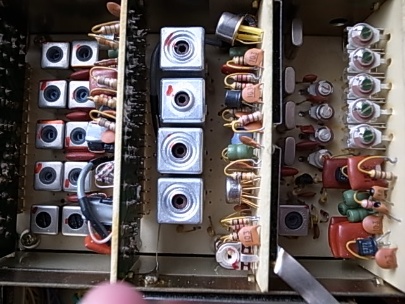
This is not a "B" so it's 10W out but that's fine for me. The case has a few "dings" and there are some holes presumably for adjusting things, but inside it's clean.

  R0014026
One nice thing about this rig is the low receive current, 400mA, and it's said that about half of that is the dial lights.

  R0014027
This one has a few quirks, AF gain doesn't seem to do much and RF gain seems very dramatic in its operation. Something is loose somewhere and the audio level jumped up dramatically when I moved the lid and has stayed that way. The S-meter seems to read rather high most of the time as well.

  R0014028
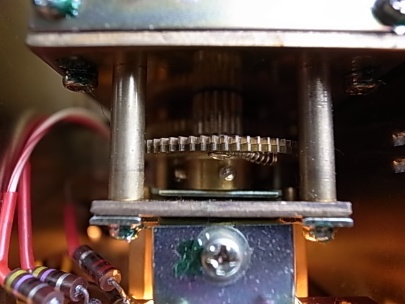
I heard lots of stations on 40 and 80m this morning but haven't had a chance to have a contact and get a signal report. The receive audio is indeed very pleasant although some QRN from distant lightning was more obvious than on more modern sets. The old "Fox Tango Seven" seems to have a few fans around which is great for a set that came out in the 1970s. It even has gears:

 
R0014030

The excessive audio gain was fixed by re-seating the audio board (the edge connector must be a little dirty). The only remaining issue is that the S meter reads a minimum of S9. I suspect something in the AGC area.

Thursday, August 11, 2011

Spintron centrifuge

Had a blood test today at a small place and they had this nifty desktop centrifuge:


It's used to force the blood cells to the bottom of the tube, where there is some sort of transparent gel that holds them in place. Entertained me anyhow.

Tuesday, August 09, 2011

Wonders of the Universe vs Cosmos

200px Brian CoxIn recent weeks we've greatly enjoyed the "Wonders of the universe" program with Professor Brian Cox.

The filming has some annoying aspects: the sun is often in shot, presumably to remind us of this close star, but it is rather glarey.
There's lots of faux bad lens photography with blurred edge images and bogus lens flare.

Brian gets about, and is sometimes in remote locations for very little reason.

Having said all that, I really enjoyed the show and Prof Cox's presentation reminds me very much of a childhood hero - Carl Sagan.

Over the past few days, I've gone back and watched "Cosmos - A personal journey" by Carl Sagan.

  Carl Sagan Planetary SocietyGiven that it aired in 1980, it has stood the test of time very well. Some of Sagan's comments about global warming are amazing for their time, although his concerns about a nuclear winter have dated somewhat. The images of scientists smoking, sometimes pipes, in the workplace look hilarious.

The spaceship of the imagination is a little dated but he carries it off well. The sound track, in part Vangelis's "Heaven and Hell" is memorable.

Cox is a worthy ancestor to Sagan (who died too young at 62). I'm glad we have him on our screens.

I hope billions and billions of people get to watch these shows.

Monday, August 08, 2011

Radio Australia antenna used for reception

It works rather well as you might expect. I just spotted this video by Dallas VK3EB where he visits the Shepparton RA transmission site during an outage for maintenance and couples a receiver to the feed line.


Great stuff, pity it wasn't used for a QRP contact too. Dallas is a great video producer, here's another one on measuring signal strength measurements with his Pegelmesser RF level meter. 252 views.